
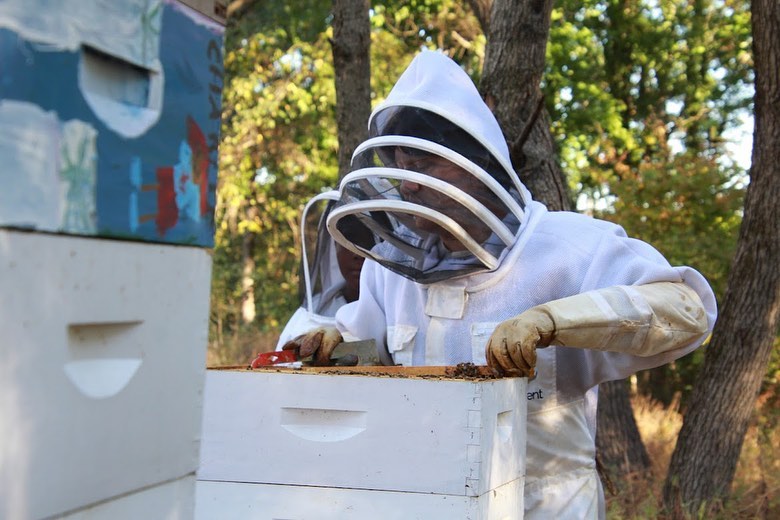
As Maryland gets ready for frost, honey bees continue their quiet, coordinated work inside the hive. Though unseen, they are anything but inactive. For those who tend to hives year-round, this season requires thoughtful planning. In this guide, we offer practical insights and strategies every keeper should consider to care for bees during the cold months, creating what might best be described as a beekeeper’s winter care guide.
What Bees Really Do All Winter Might Surprise You
Bees survive winter not by sleeping, but by forming a tight cluster that maintains warmth through constant, low-level movement. Vibrating their wing muscles, they generate enough heat to keep the center of the cluster near 90°F—even as the outside air dips well below freezing. This heat costs energy, and that energy comes from honey stores.
A strong colony needs between 60 to 90 pounds of stored honey to make it through winter. Begin assessing stores in early fall. If the hive feels light when gently lifted from the back, you’ll likely need to supplement with sugar bricks or fondant. These can be placed directly on top bars inside the hive, giving bees access to emergency reserves when needed most.
For more details on honeybee overwintering behavior, the University of Georgia Extension offers an excellent explanation of the bees’ winter biology.
Too Much Warmth Can Hurt: Why Airflow Saves Bees
Keeping bees warm is only half the story. The bigger threat in winter is moisture. As bees respire and the warm cluster meets the cold inner walls of the hive, condensation forms. If it drips back down onto the bees, it can chill and kill them faster than the cold ever could.
Instead of insulating too heavily, focus on passive ventilation. A small upper entrance or top vent allows warm, moist air to rise and escape. Adding a moisture quilt box filled with wood shavings or burlap just above the inner cover can absorb excess humidity without sacrificing heat. Avoid placing the hive in low spots where cold air settles. Ideally, face the entrance toward the southeast to catch the morning sun.
This balance of warmth and airflow is detailed further by Michigan State University’s Winter Webinar, which emphasizes how vital proper ventilation is to hive survival.
Simple Ways to Keep the Wind Out and the Warmth In
In climates with harsh winters, hive wrapping can be a helpful buffer against cold winds. Use breathable materials, like foam boards or tar paper, secured loosely so air still circulates. Avoid plastic wraps or anything that traps moisture inside.
Protection from wind is especially important. Position hives behind natural windbreaks, like shrubs or fences, or construct simple barriers using straw bales or stacked pallets. Keep entrances cleared of snow and debris so bees can exit for cleansing flights on milder days.
Also, consider switching to solid bottom boards during winter to retain heat. These small steps create a more stable microclimate inside the hive, where the bees can manage their energy more efficiently.
How to Check Your Hive Without Lifting the Lid
It’s tempting to lift the lid and check in, but winter calls for restraint. Opening the hive allows heat to escape and can disrupt the tightly formed cluster. Instead, listen.
On warmer days, press your ear against the side of the hive. A steady hum tells you they’re alive and well. If you’re unsure or suspect issues, a thermal imaging camera or endoscope inserted through the entrance can offer a non-invasive peek.
Keep records of what you hear, see, and feed. Every winter adds to your understanding of your bees and your local climate’s demands.
Every Winter Teaches Something New
Caring for bees in winter is more than an act of maintenance—it’s a partnership. It’s about trusting the colony’s instincts while offering support in the ways only a human can. If you’re new to beekeeping, consider joining a local beekeeping association for workshops and seasonal tips. The Maryland State Beekeepers Association is one such resource, connecting the community with hands-on education.
FAQ
- Do bees stay active all winter?
Yes, bees remain inside the hive and form a cluster, vibrating to maintain heat. They don’t fly except on mild days. - Is it okay to open the hive during cold months?
Only if absolutely necessary and during brief warm spells above 50°F. Otherwise, keep inspections visual and external. - How much honey should my hive have before winter?
Between 60 and 90 pounds of honey is recommended to support the cluster through the entire season. - What can I do if I suspect the bees are running out of food?
Place sugar bricks, fondant, or a candy board directly above the cluster to provide emergency food. - Why is moisture so dangerous to bees in winter?
Water dripping onto the cluster can chill and kill bees, even when temperatures aren’t extremely low. Proper ventilation prevents this.
Winter Is Where the Strongest Hives Begin
At Piedmont Learning Center, we believe nature is the best classroom—and winter offers one of its most profound lessons. Bees show us how to collaborate, conserve energy, and trust in preparation. Supporting them through the cold is a hands-on act of stewardship and a reminder of how community, even one made of wings and wax, holds strong through challenge.
If you’re tending hives this season, we hope this guide empowers you to move with the rhythm of the colony, supporting its needs while learning something new about your own capacity to care.